Combed cotton, Patagonian merino, llama, mohair and plant-based fibers: a yarn collection built around raw material, technical performance and a distinctive approach to color.
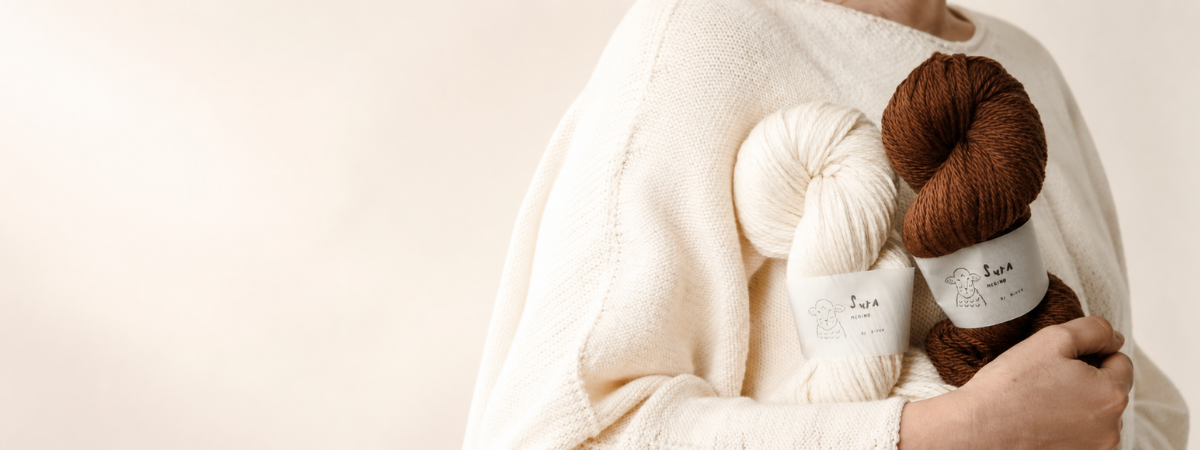
B-TEX is Budetex’s yarn division.
Our collection brings together yarns developed from natural fibers and carefully selected blends, with different constructions, yarn weights and performance characteristics for very different projects: from ultra-light fabrics to warm garments, socks, crochet, accessories and pieces where drape or texture take center stage.
We do not build the collection around a single material. We work with each fiber according to what it can express best.
Por eso dentro de B-TEX conviven Argentine cotton, Patagonian merino wool, llama, mohair, viscose, undyed fibers and small-batch hand-dyed editions.
Not every yarn should behave the same way.
Weight, twist, fiber composition, ply, yardage and construction all affect how a yarn drapes, insulates, defines stitches, withstands wear and moves with the body.
In Argentina, yarns are often described by ply count, technical yarn numbering or simply as fine, medium or thick.
In the international language of knitting and crochet, the system we use and actively promote, es habitual encontrar categorías como Lace, Fingering, Sport, DK, Worsted, Bulky o Super Bulky.
These categories are useful because they make it easier to compare yarns from different brands and origins, but they should not be treated as an absolute mathematical rule.
| Category | Approx. yardage / 100 g | Approx. WPI | Typical use |
|---|---|---|---|
| Lace | 600 m or more | 30–40+ | Shawls, light layers, held together with another yarn |
| Fingering / Sock | 350–500 m | 14–30 | Socks, fine sweaters, lightweight garments |
| Sport | 280–350 m | 12–18 | Light garments with a little more body |
| DK | 200–280 m | 11–15 | Sweaters, cardigans, accessories |
| Worsted / Aran | 140–200 m | 9–12 | Warm garments, textured stitches, accessories |
| Bulky | 100–140 m | 6–9 | Quick warm knits, accessories, blankets |
| Super Bulky | less than 100 m | 5–6 | Very bulky fabrics |
Important: yardage ranges are approximate. Two yarns with the same yardage can feel and behave very differently depending on fiber, twist, density, loft and construction.
WPI means Wraps Per Inch.
It is a practical way to estimate yarn thickness when a label is unavailable, when comparing two yarns or when interpreting a yarn from a different market.
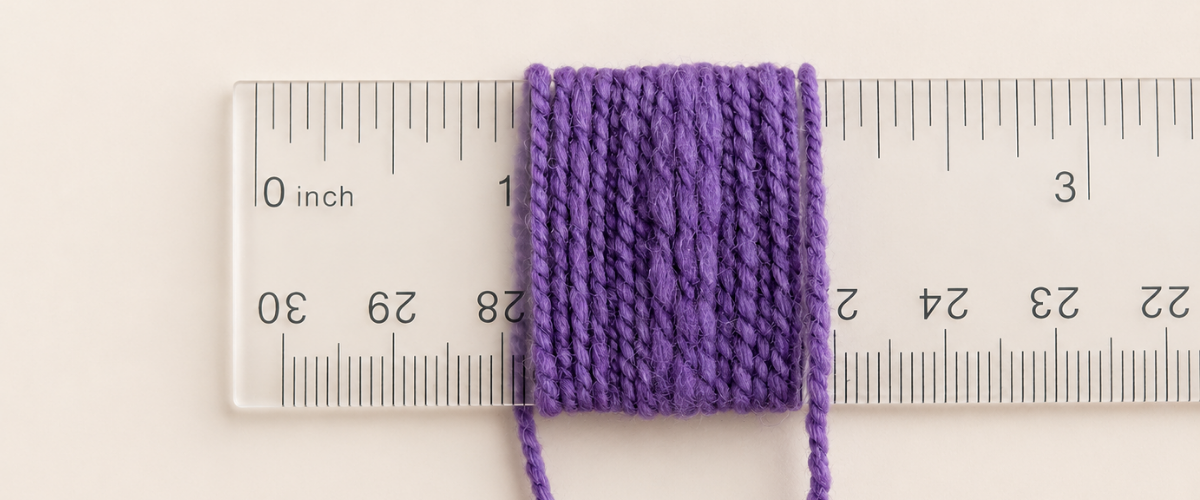
Wrap the yarn around a ruler or another tool with a consistent diameter.
The wraps should sit next to one another without overlapping or compressing the fiber.
Count how many wraps fit within one inch (2.54 cm).
The more wraps that fit within one inch, the finer the yarn.
WPI is a reference, not an absolute measurement. Wrapping tension and the compressibility of the fiber can affect the result.
Before exploring each collection in detail, this table provides a quick overview of our current yarn range.
| Yarn | Fiber content | Category | Yardage |
|---|---|---|---|
| Cori Cori | 100% cotton | Fingering / DK / Worsted | 440 / 220 / 170 m per 100 g |
| Cori Cori Atelier | 100% combed cotton | Sport | 330 m per 100 g |
| Numi | 75% viscose / 25% cotton | DK | 250 m per 100 g |
| Sura | 100% Patagonian merino, 20 μ | Fingering / Worsted | 400 / 166 m per 100 g |
| Soki | 85% merino / 15% polyamide | Sock | 385 m per 100 g |
| Midori | 45% mohair / 20% merino / 20% viscose / 15% polyamide | Lace | 215 m por 25 g / 860 m per 100 g |
| Merino Esencia | 100% merino, 20 μ, undyed | DK | 270 m per 100 g |
| Inka | 50% dehaired llama / 50% merino | Sport | 350 m per 100 g |
| Bespoke Yarns | Hand-dyed Sura and Soki bases | Fingering / Worsted / Sock | Depends on base yarn |
Cori Cori parte de una fibra que forma parte central de la tradición textil argentina: combed cotton sourced from plantations in northeastern Argentina.
We wanted a yarn that is soft, matte, versatile and comfortable for garments worn directly against the skin.
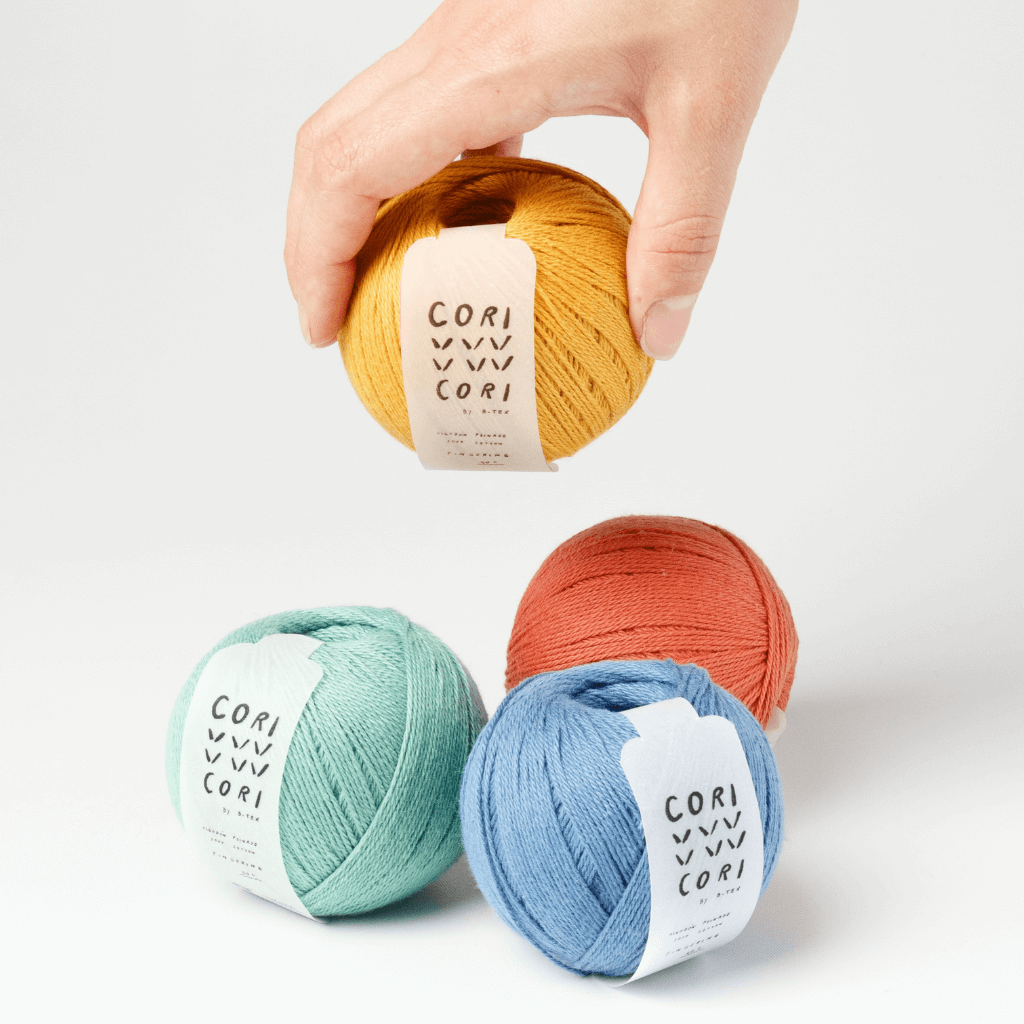
440 m / 100 g.
Fine, lightweight and economical in use. Ideal for delicate garments, tops, lightweight sweaters, summer knits and projects where stitch definition matters without adding too much bulk.
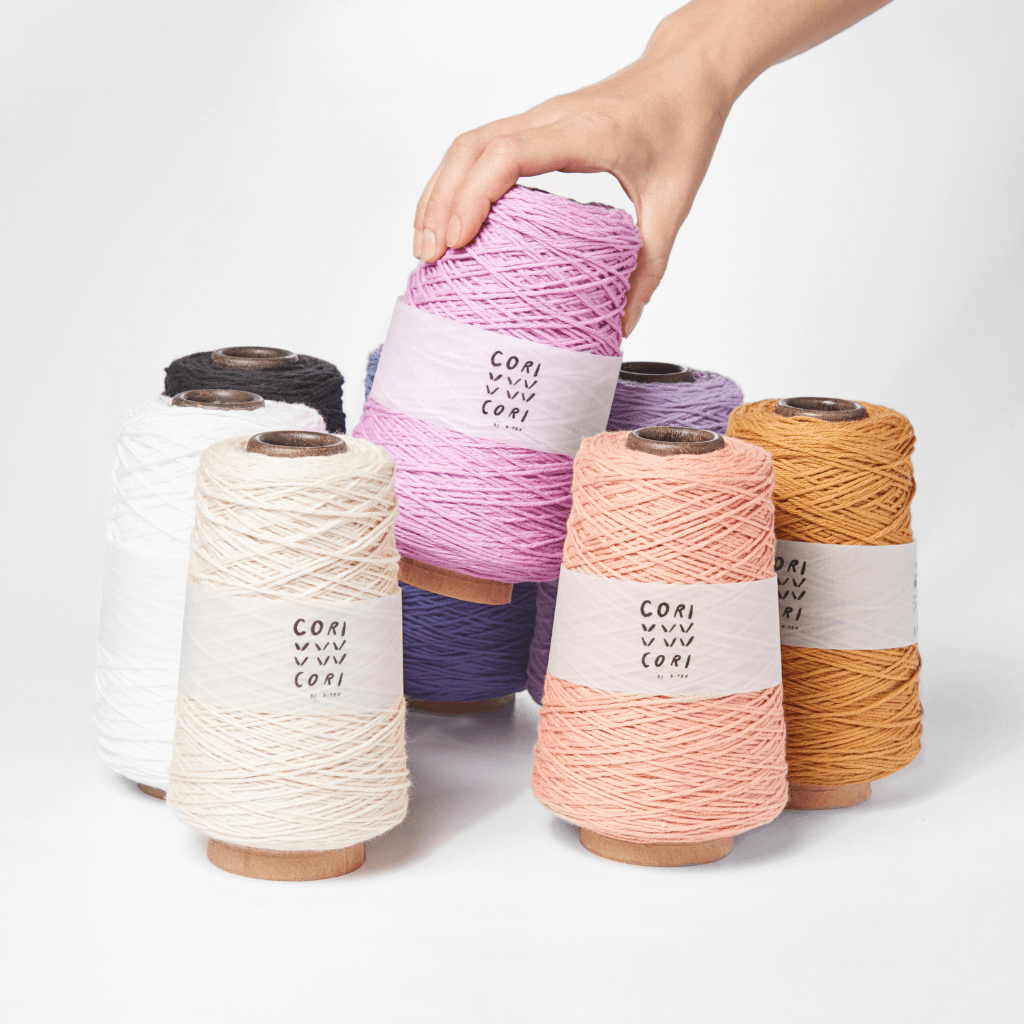
220 m / 100 g.
A middle ground between Fingering and Worsted: good stitch definition with added body, without the bulk of the heavier version.
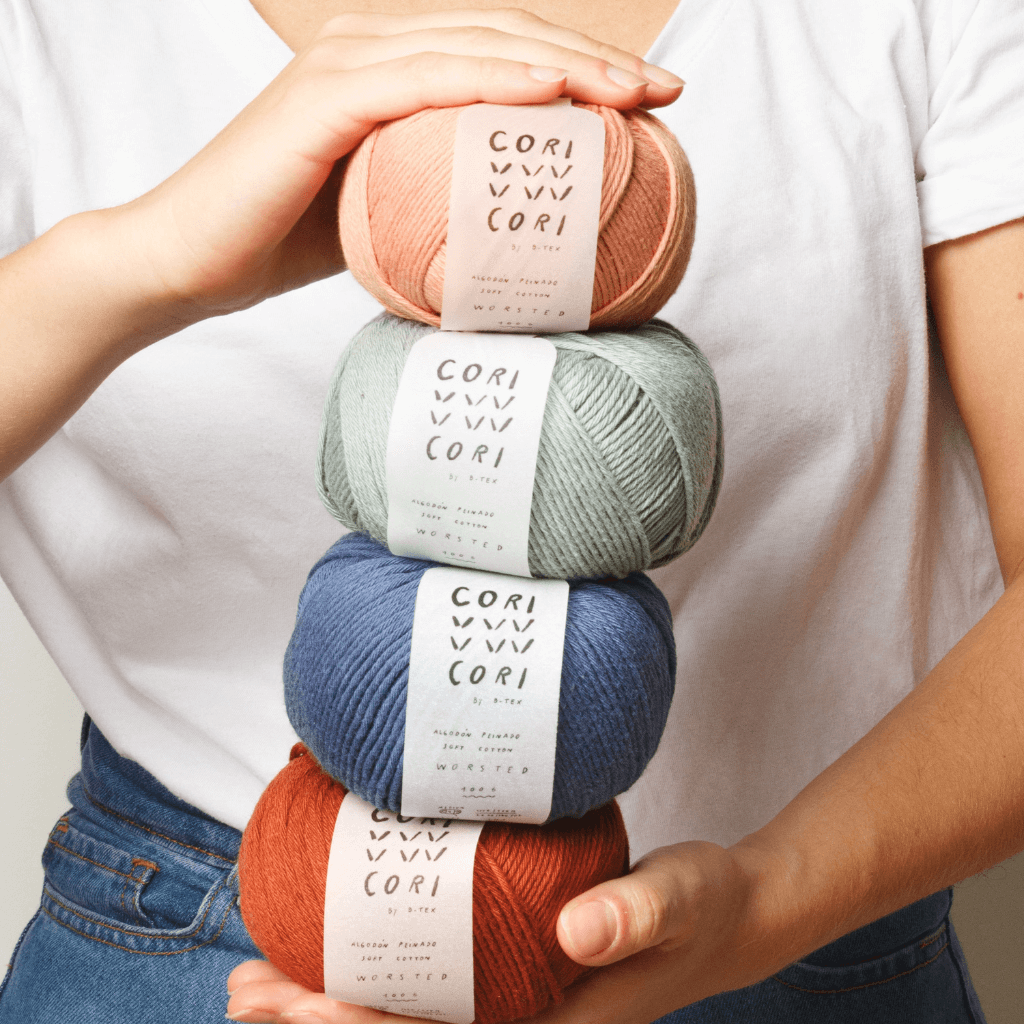
170 m / 100 g.
More body and presence, with a construction suited to structured garments, accessories and projects where clear stitch definition is important.
Una de las ventajas de trabajar los distintos títulos dentro de la misma colección es poder construir proyectos con una misma identidad de fibra y color, pero distintos pesos visuales.
.jpg)
Design by our Craft Studio division.
Cori Cori Atelier was developed in search of a finer, softer construction with greater drape.
Está elaborado con 100% combed cotton y presenta una torsión desarrollada para obtener un acabado especialmente delicado.
Its base yarn is finer and more delicate than the one used for the standard Cori Cori range.
330 m / 100 g · Sport.
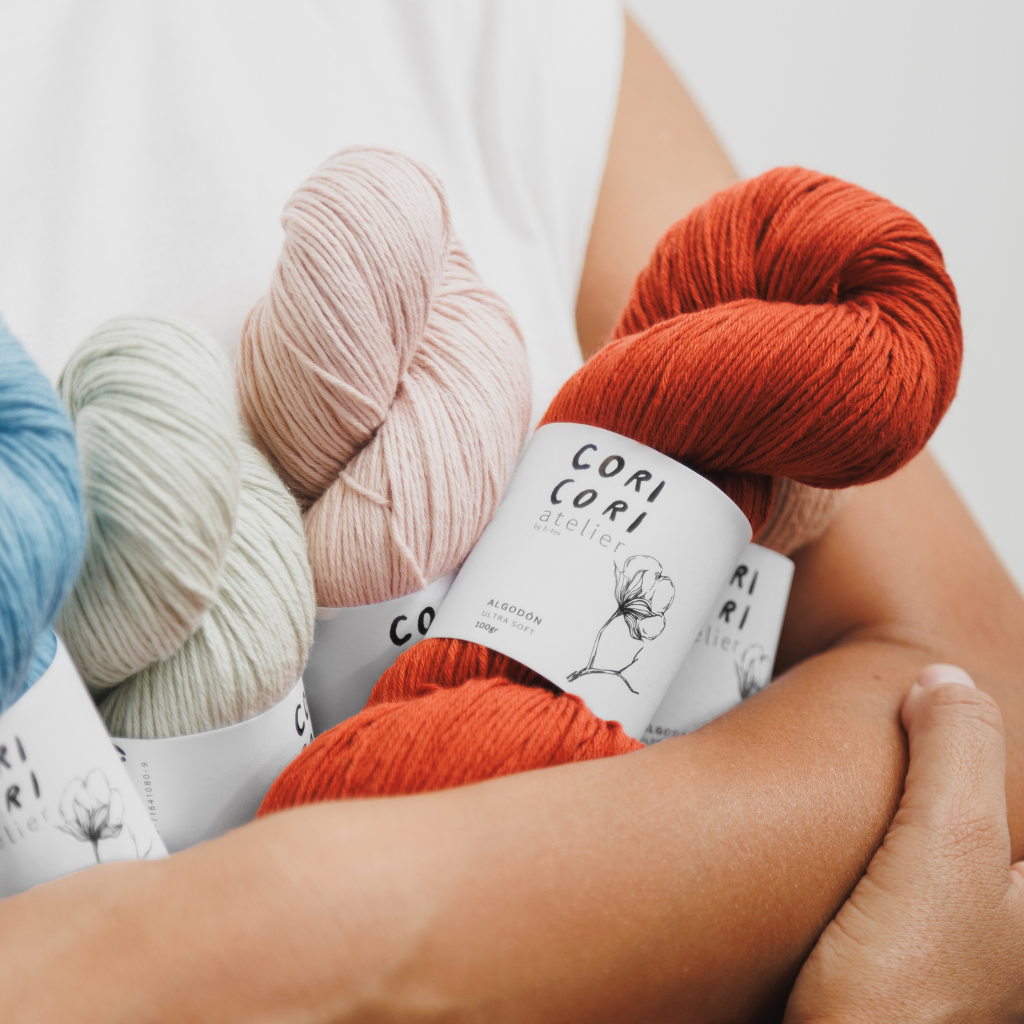
Finer does not simply mean lighter.
With Atelier, we aimed for a more delicate feel against the skin, a different drape and a more refined visual finish.
75% viscose / 25% cotton · DK · 250 m / 100 g.
Numi was designed for garments where the behavior of the fabric matters as much as its texture.
La viscosa aporta brillo, suavidad y fluidez. Cotton adds structure and stability. The result is a cool, silky yarn with a drape very different from wool or traditional cotton.
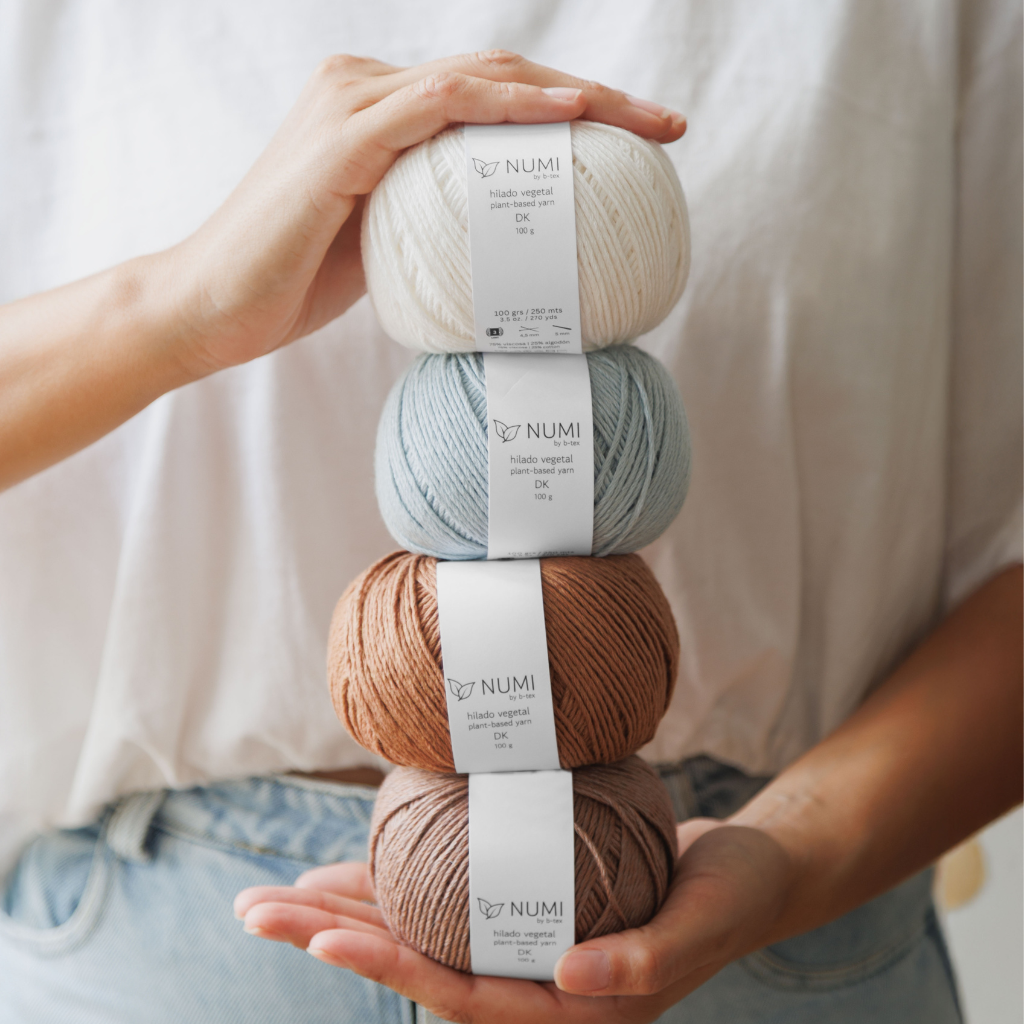
Ideal for garments designed to move fluidly with the body.
Viscose adds subtle sheen and a silky finish.
A particularly interesting option for transitional-season garments and mild climates.
Sura is made from 100% combed 20-micron merino wool, seleccionada de productores patagónicos.
We developed it to balance softness, natural elasticity, stitch definition and warmth.
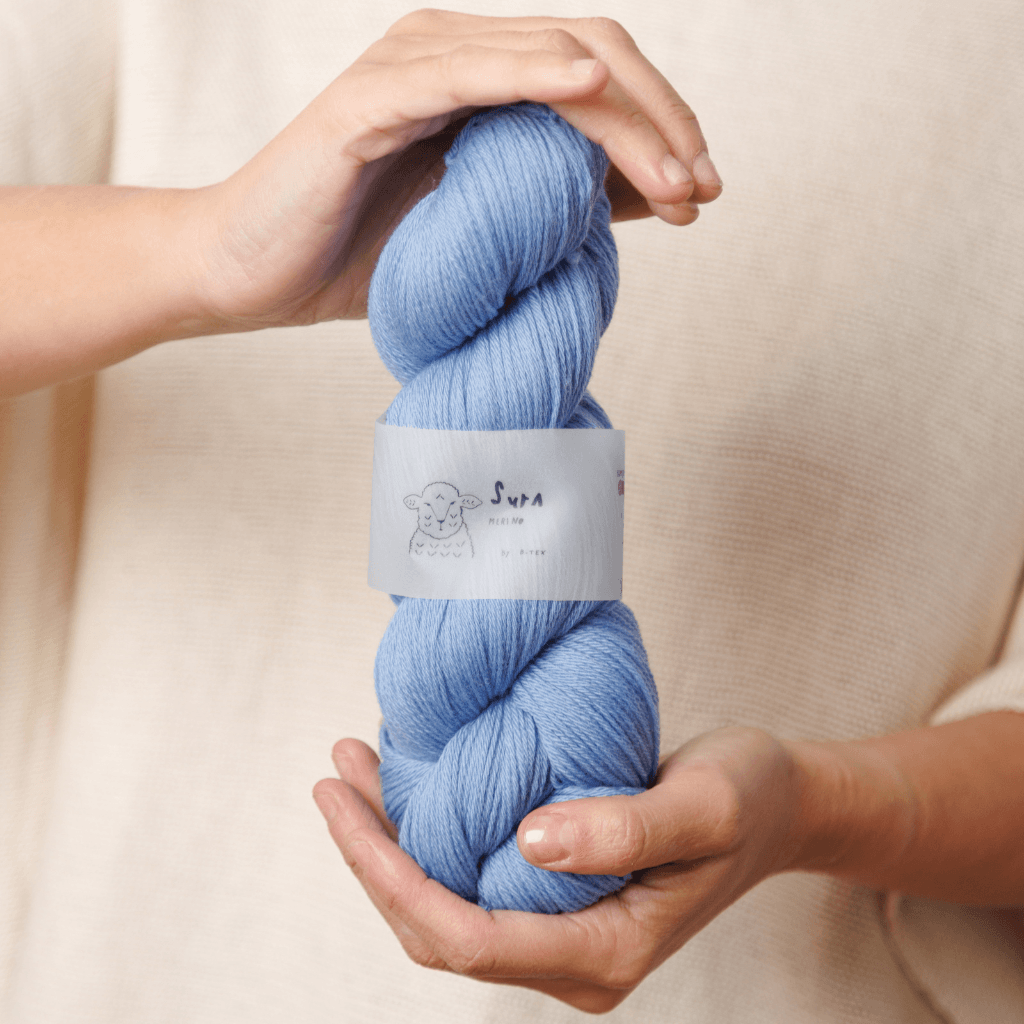
400 m / 100 g.
Lightweight and versatile, suitable for fine sweaters, shawls, double-stranded knitting and projects where lightness is essential.
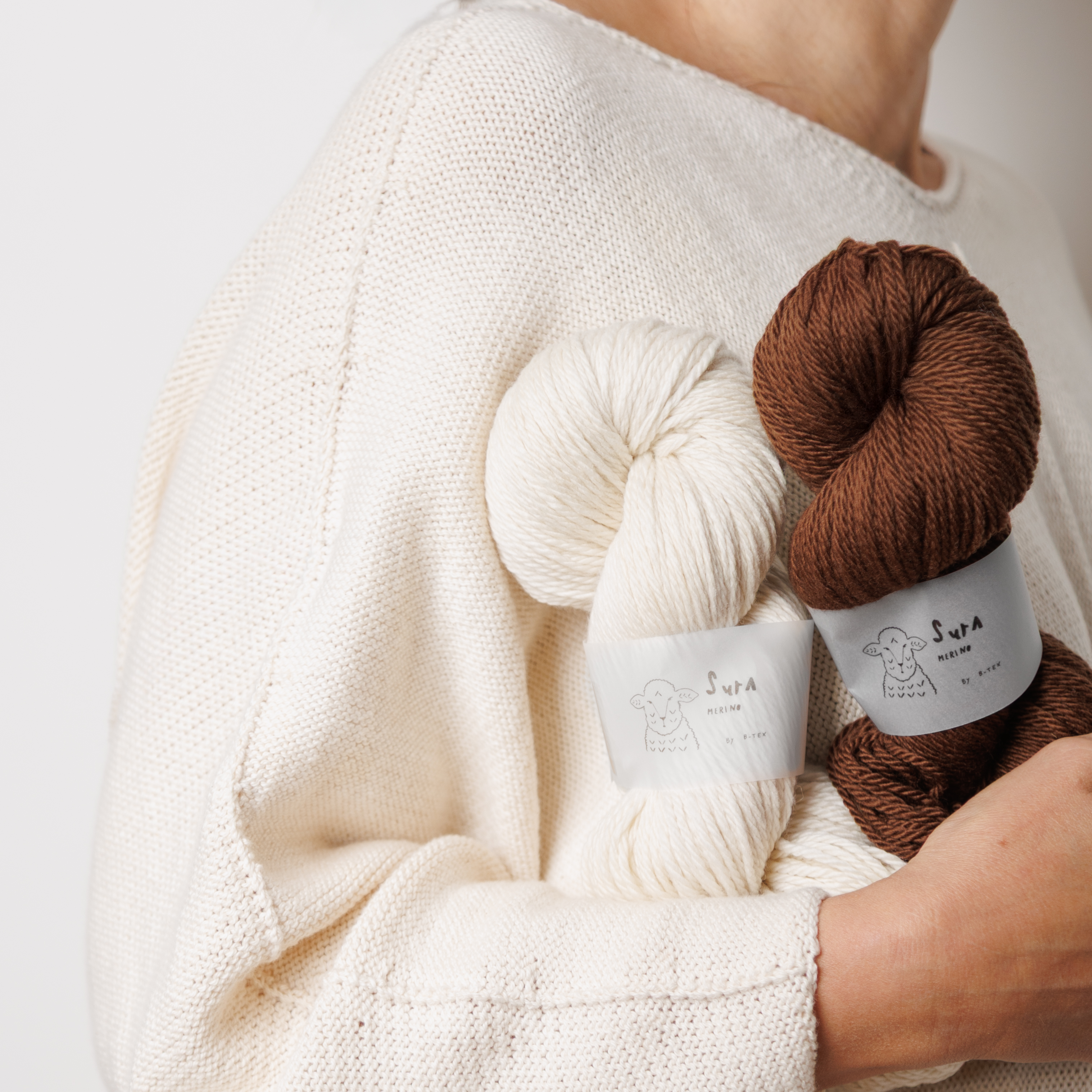
166 m / 100 g.
More body and volume for warm garments, textured stitches, cables and projects where stitch structure takes center stage.
.jpg)
Design by our Craft Studio division.
Inka combines two fibers deeply connected to the landscape and textile traditions of our region:
50% dehaired llama + 50% 21-micron merino wool · Sport · 350 m / 100 g.
Llama contributes character, structure and a distinctive visual identity. Merino balances the blend with softness, elasticity and comfort.
.jpg)
Two fibers, two behaviors, one yarn.
Inka is not designed for one fiber to disappear into the other. Its character lies precisely in the balance between llama texture and merino softness.
It is especially suited to warm garments, visible texture and projects where the material character of the fiber should remain present.
85% merino / 15% polyamide · Sock · 385 m / 100 g.
Soki was specifically developed to combine merino wool’s softness and thermal regulation with the abrasion resistance provided by polyamide.
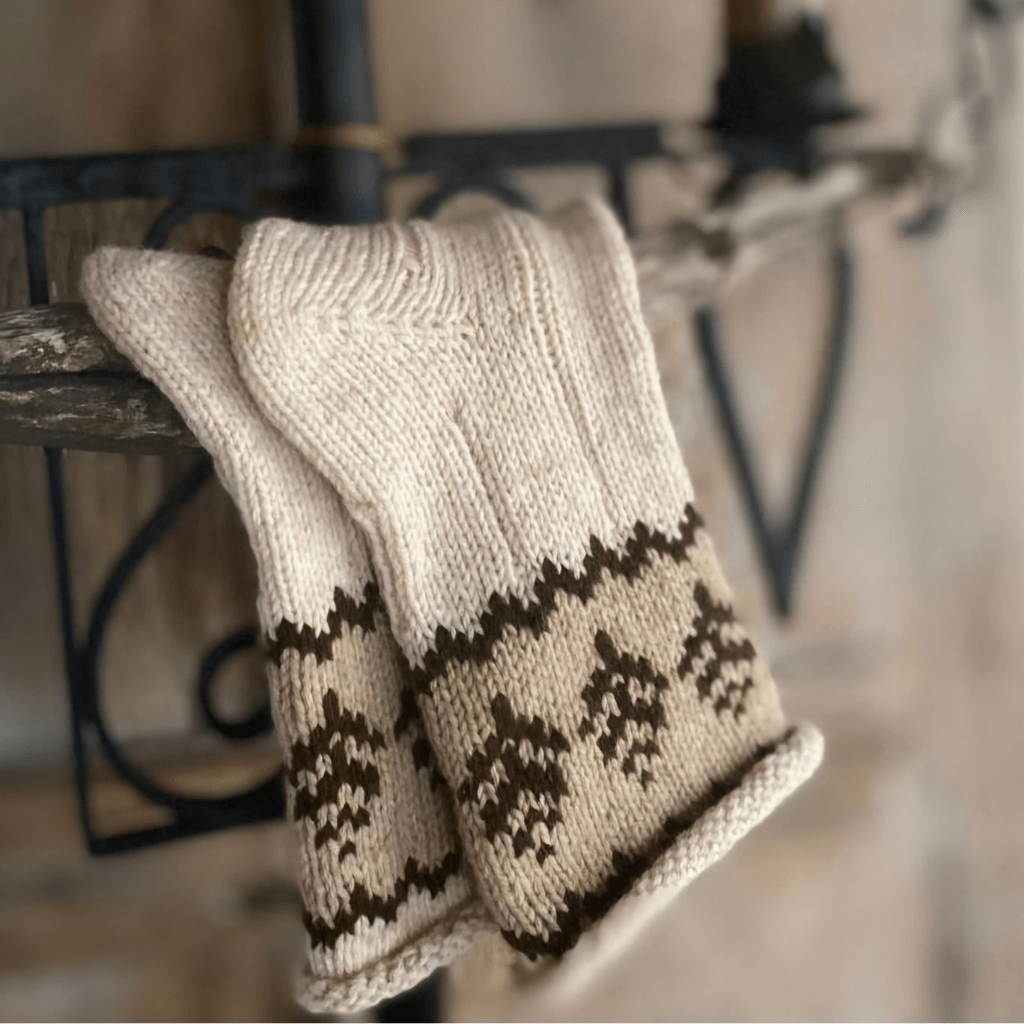
Design by Viviana Chaparro.
Its most obvious application is socks, but its yardage and performance also make it an excellent base for lightweight sweaters, accessories and hard-wearing garments.
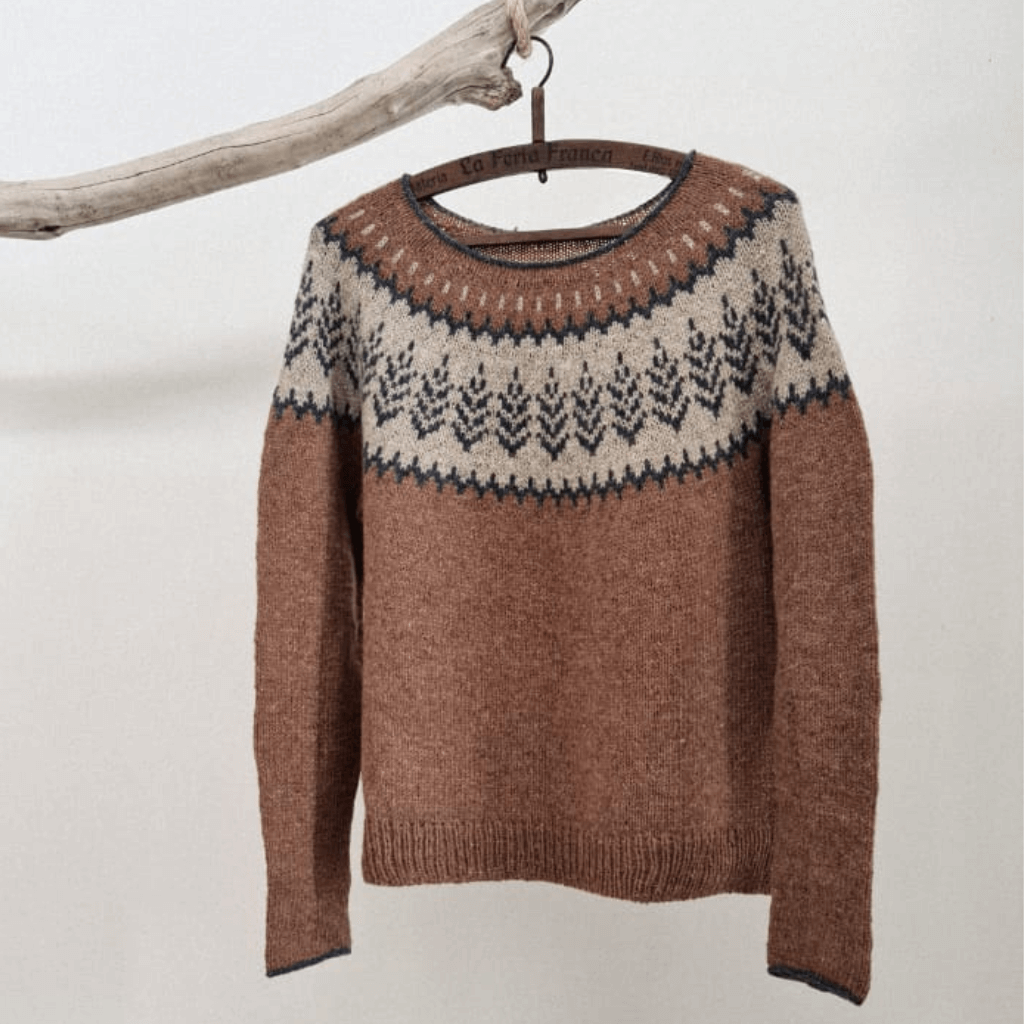
Design by Viviana Chaparro.
Polyamide reinforces the yarn against abrasion and tension.
Merino contributes softness, thermal regulation and natural elasticity.
As a general reference, one 100 g skein is enough for one pair of socks.
45% mohair / 20% merino / 20% viscose / 15% polyamide · Lace · 215 m / 25 g.
Midori is a lightweight, high-yield yarn designed to be worked on its own or held together with another yarn.
Mohair creates the halo. Merino adds warmth. Viscose contributes luminosity, while polyamide adds stability and durability.
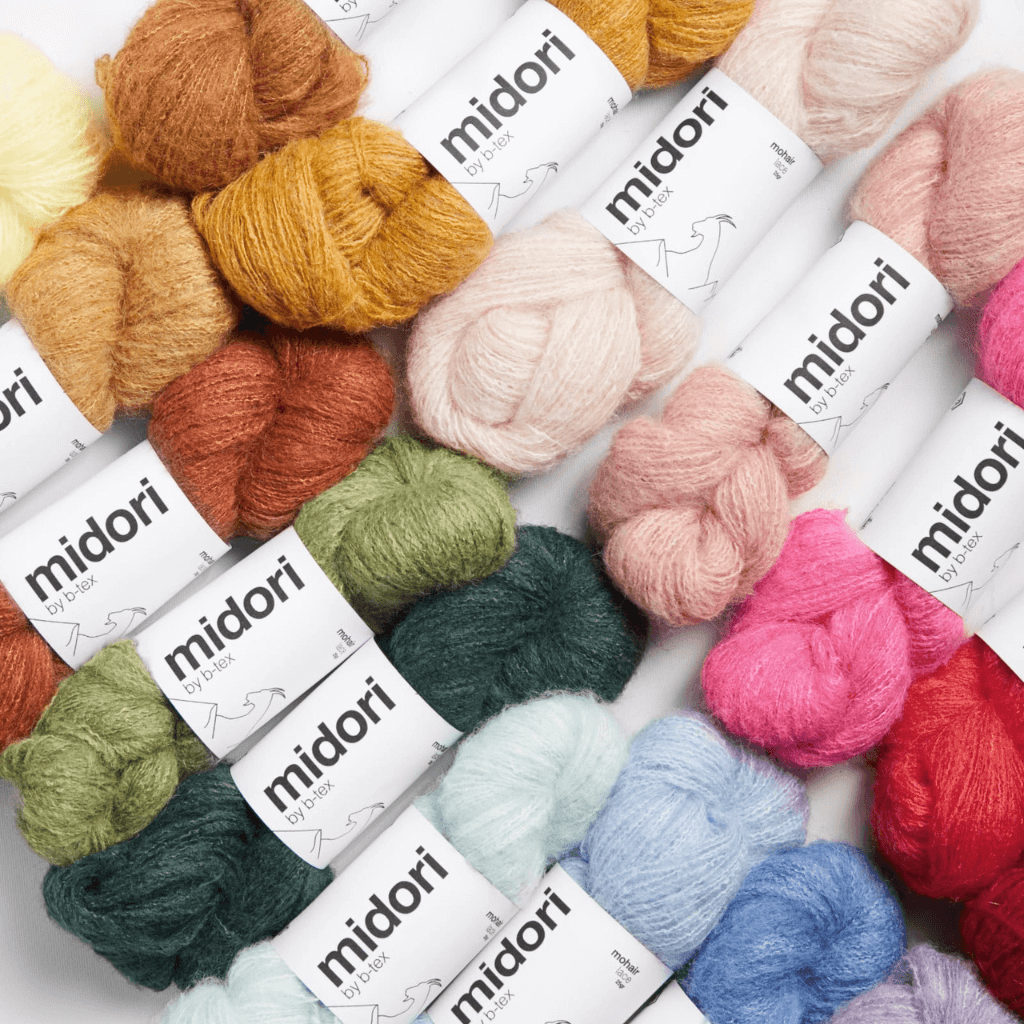
Ultra-light, sheer fabrics with a pronounced halo.
Greater density, stronger color presence and added warmth.
A more compact fabric while preserving mohair’s characteristic lightness.
It can transform the texture, color and halo of a base yarn without replacing it.
100% superfine 20-micron merino · DK · 270 m / 100 g.
Merino Esencia se presenta exclusivamente en tonos naturales de la oveja, sin teñir.
Its color comes from the fiber itself rather than from dye.
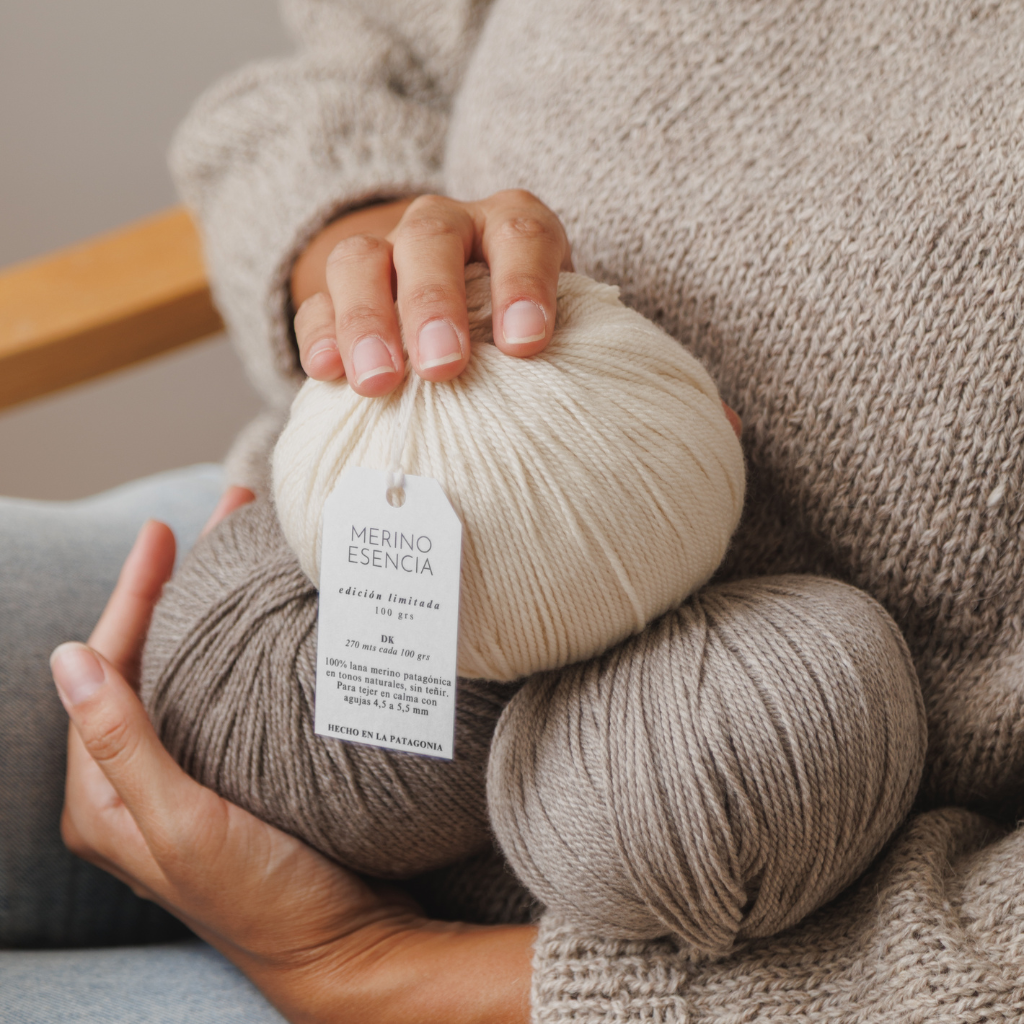
In an undyed yarn, variation is not a flaw.
The shades are created from naturally different fleece colors. Small variations between lots may therefore occur as part of the raw material’s natural origin.
It is especially suited to refined, minimalist and timeless garments where the fiber itself should take center stage.
Bespoke Yarns is our collection of hand-dyed yarns produced in small batches in Buenos Aires.
It begins with yarn bases already developed within B-TEX and uses them as a canvas for color collections with a distinct identity.
The same color concept can behave differently depending on fiber, yarn weight and construction. That is why Bespoke is developed across different bases, including Sura Fingering, Sura Worsted y Soki.
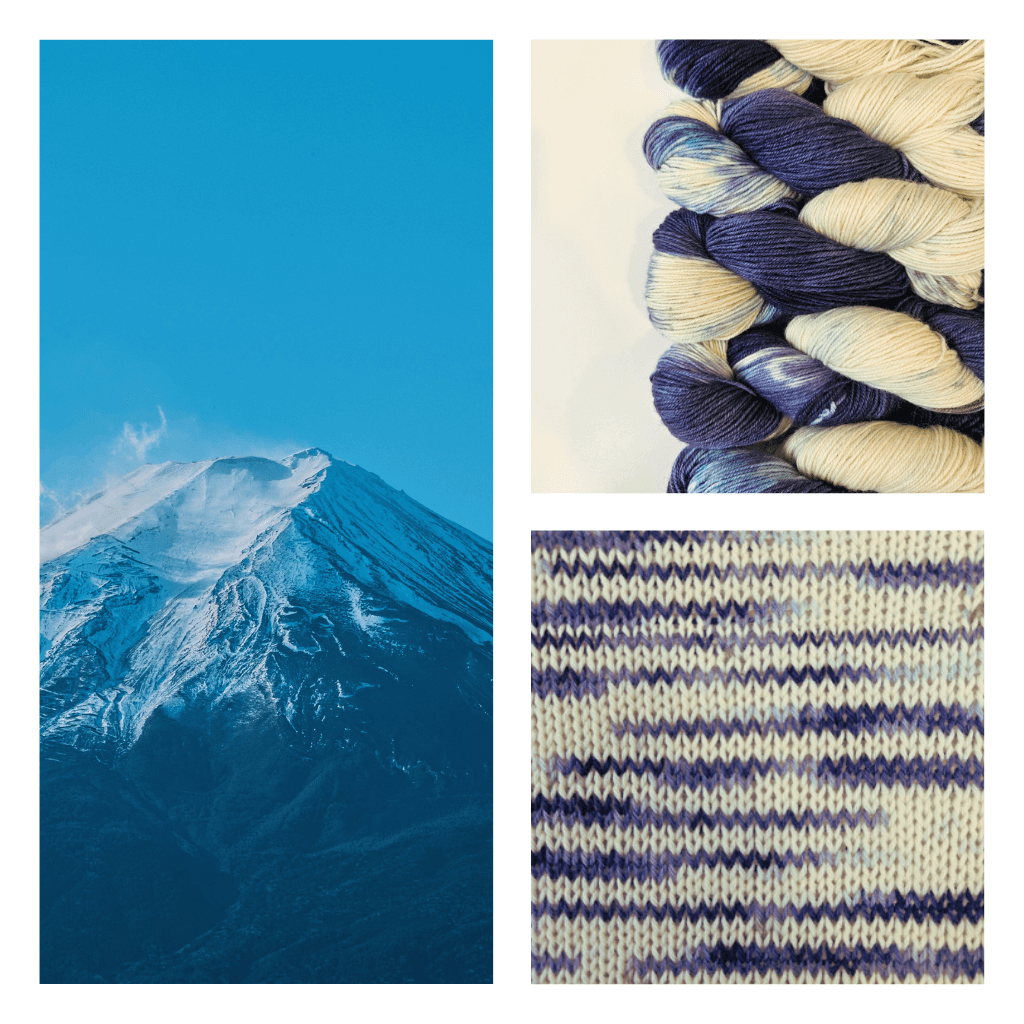
We do not create colors in isolation.
Each collection begins with a visual and material idea: an atmosphere, a landscape, a texture or a particular relationship between color and fiber.
Wabi propone una mirada serena y minimalista.
It works with soft colors, restrained contrast and compositions where beauty emerges through simplicity, balance and the space between tones.
It is perhaps the quietest Bespoke line: less contrast, more breathing room and a particularly delicate relationship between the yarn’s natural base and the applied color.
Sabi explora una estética más profunda y mineral.
Colors may show stronger contrast, areas of intensity and transitions reminiscent of aged surfaces, stone, natural pigments and materials transformed by time.
The natural irregularity of hand dyeing is not concealed: it is part of the skein’s character and of how the color later appears in the fabric.
Ensō parte de una idea de síntesis.
The collection works with more essential combinations, allowing a few gestures of color to build a clear identity on the fiber.
The focus is less on accumulating tones and more on the relationship between emptiness, contrast, repetition and movement as the skein becomes fabric.
Serenity, soft tones, restrained contrast and an aesthetic of simplicity.
Materiality, depth, pigment and a beauty connected to the passage of time.
Synthesis, rhythm, contrast and compositions built with few elements.
Las tres líneas comparten una misma forma de trabajo: small batches, hand dyeing and a direct relationship between the color concept and the chosen base yarn.
This also means that small variations may occur between skeins and batches. We are not seeking exact industrial reproduction; we want to preserve the character of the hand-dyeing process within a coherent collection.
| If you are looking for... | Start with... |
|---|---|
| Fine, matte, soft cotton | Cori Cori Fingering |
| Cotton with more body | Cori Cori Worsted |
| Especially delicate cotton | Cori Cori Atelier |
| Plant-based drape and sheen | Numi |
| Fine pure merino | Sura Fingering |
| Pure merino with more body | Sura Worsted |
| Natural llama-and-merino texture | Inka |
| Socks or hard-wearing garments | Soki |
| Halo, lightness or holding together with another yarn | Midori |
| Natural undyed merino | Merino Esencia |
| Hand-dyed color and small batches | Bespoke Yarns |
Fiber, micron count, twist, ply, yarn weight, yardage, presentation and color.
Every one of those decisions changes the result.
That is why B-TEX is neither a closed collection nor a sum of isolated products. It is a system of materials that continues to evolve through what we learn from the fibers themselves, from our workshops, from designers who work with them and from the people who knit and crochet with them every day.
We want every yarn to have a reason to exist.
Not simply a different color, but a fiber, construction or performance characteristic that contributes something specific to a project.
Yes. B-TEX is Budetex’s yarn division and brings together our own yarn collections.
They are international categories used to describe yarn weight approximately. They relate to diameter, yardage and WPI, although there is no perfect mathematical equivalence across every fiber and construction.
It is a very useful reference, but not enough on its own. Two yarns with the same yardage can behave differently depending on fiber, twist, density and construction.
Wraps Per Inch: the number of yarn wraps that fit within one inch without overlapping or compressing the fibers. It is a practical way to estimate yarn thickness.
Cori Cori and Cori Cori Atelier are 100% cotton. Numi combines viscose and cotton.
Sura and Merino Esencia are 100% merino. Soki combines merino and polyamide; Midori includes merino in a blend with mohair, viscose and polyamide; and Inka combines llama and merino.
Soki was developed specifically with socks in mind: 85% merino and 15% polyamide, balancing comfort and durability.
Midori is especially versatile for this purpose. It can be worked on its own, with multiple strands, or held together with a base yarn.
No. It is offered in the fiber’s natural shades, so slight tonal variations may occur between lots.
Yes. Bespoke collections begin with Budetex-developed bases such as Sura and Soki, then reinterpret them through small-batch hand dyeing.
A fiber is more than a raw material.
It is touch, structure, origin, performance and possibility.
From Argentine cotton to Patagonian merino, from llama to mohair and plant-based fibers, our collection is built around yarns with a distinct identity and a clear reason to exist.


