Japanese tradition applied to crochet
Two crochet-hook families with very different identities: Soft Touch, lightweight and compact, and Amour, fuller in the hand and ergonomic.
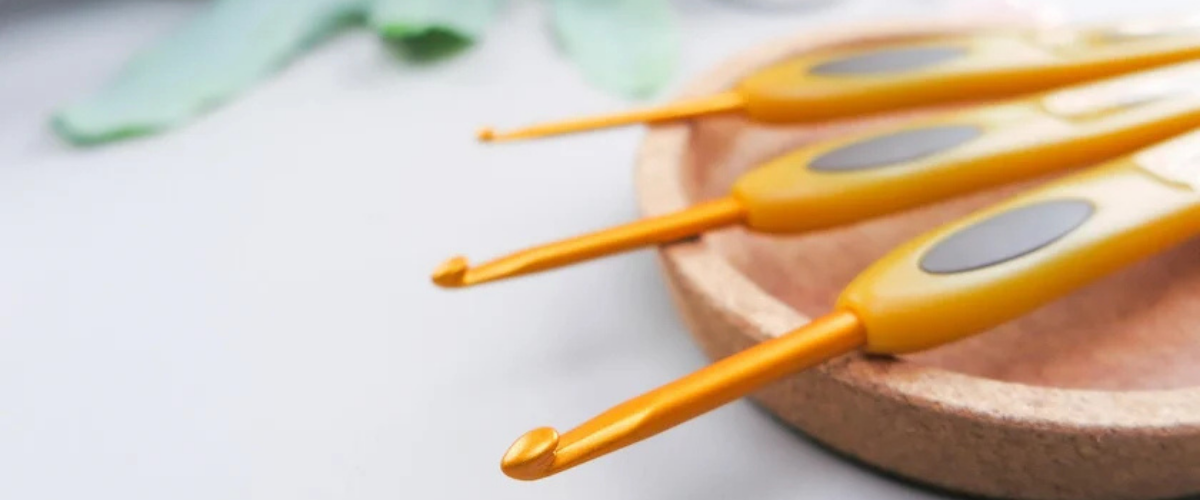
Clover is a Japanese brand with a very broad international catalog of tools for sewing, patchwork, knitting, crochet and crafts.
At Budetex, we decided to focus our Clover selection mainly on one category: crochet.
Within that category, we work with two of its best-known families:
Both aim to improve ergonomics and precision compared with a conventional crochet hook, but they do so in quite different ways.
For us, one tool holds a particularly important place within the Clover universe: Soft Touch.
It is one of those tools whose difference cannot be fully understood from a photograph. It becomes clear when held, used for a while and compared with other crochet hooks.
With crochet hooks, small differences in tool geometry can become very noticeable after hundreds or thousands of stitches.
The shape of the hook head, depth of the throat, handle volume, thumb-rest position and the relationship between weight and length all influence how we hold and move a crochet hook.
Clover developed Soft Touch and Amour around that challenge: how to make a repetitive-use tool comfortable, precise and easy to control during long sessions.
But it did not arrive at a single answer.
Soft Touch uses a relatively flat, lightweight and compact handle.
Amour uses a three-dimensional, fuller handle completely covered in a soft, non-slip material.
That difference explains why two people may try both crochet hooks and end up choosing different tools.
Clover has an extensive international catalog.
At Budetex, we chose to focus mainly on the families we consider most representative for crochet: Soft Touch y Amour.
Within these lines, we aim to maintain continuity of sizes and regular restocking for both retail and wholesale.
Clover also offers knitting needles, circular needles, sewing and patchwork tools, and many other categories that are not currently part of our regular selection.
Is there a Clover product we do not currently carry that you would like to find in Argentina? Contact us. We take these requests into account when planning future additions.
For wholesale sales to specialty retailers, we can also evaluate references outside our regular selection.
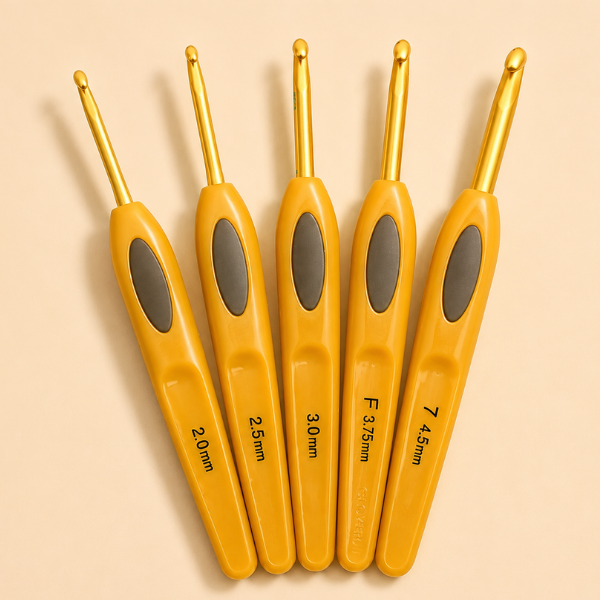
Within the Clover collection, Soft Touch is a reference point for us.
Its design differs considerably from the classic crochet hook with a cylindrical handle.
Clover uses a lightweight, wide and relatively flat grip, with a soft-textured support area.
The goal is to provide a stable, easy-to-hold tool that reduces effort during long sessions.
Clover describes the Soft Touch head with two particular characteristics:
This geometry is designed to pick up the yarn with relatively small, fluid movements.
One of the clearest differences appears in the hand.
Soft Touch is lightweight, compact and has a clearly defined support area.
It is not designed to fill the entire palm.
For some crocheters, this creates a very direct feel: the hand stays close to the work and movements can remain small and precise.
For others, a fuller handle may feel more comfortable.
That personal difference is exactly what makes it interesting to compare with Clover Amour or Tulip ETIMO.
Our reference point within Clover: if you have never tried a Clover crochet hook, Soft Touch is the line we would look at first to understand what makes the brand different.
The Soft Touch family is divided into two main size ranges.
Standard Soft Touch: 2 to 6 mm.
Fine Soft Touch: 0.50 to 1.75 mm. Ideal for ultra-fine yarns and bead crochet.
This allows a similar handle philosophy to be maintained across conventional projects and very fine crochet work.
Amour represents another approach to ergonomics.
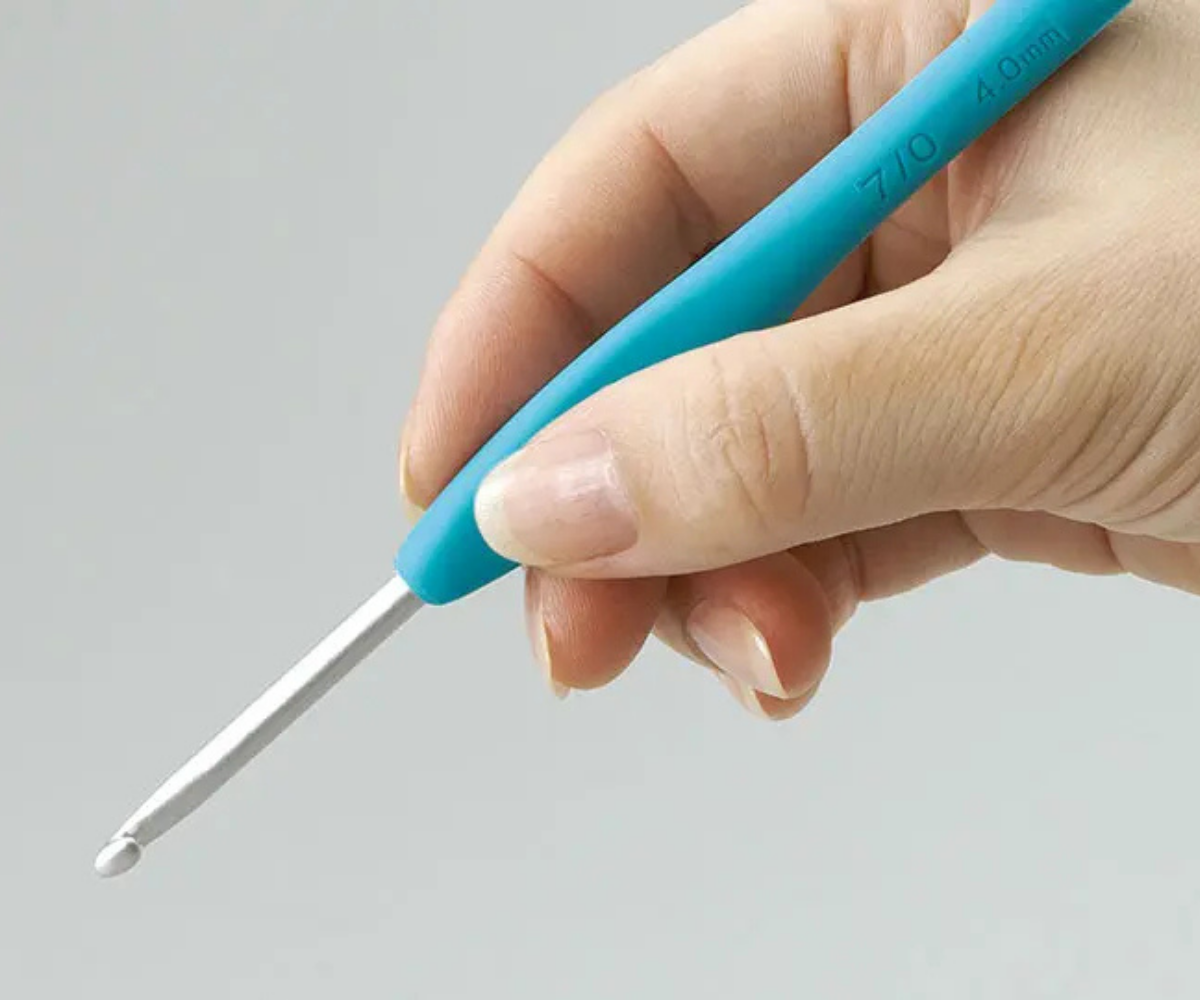
Instead of a flat, compact handle, Clover uses a three-dimensional, curved and fuller handle.
The entire handle surface uses a soft, non-slip material.
Clover explains that these 3D curves are designed to fit the fingers and allow the tool to be held without unnecessary force.
One of Amour’s major advantages is its wide size range.
Standard Amour: 2 to 15 mm.
Fine Amour: 0.60 to 1.75 mm.
This makes Amour an especially versatile family for work ranging from very fine crochet to extremely bulky yarns.
Its handle has more presence in the hand than Soft Touch and may be especially appealing to anyone who prefers a rounder, fuller tool.
We do not believe one line necessarily replaces the other.
The main difference lies in how the handle relates to the hand.
| Feature | Soft Touch | Amour |
|---|---|---|
| Handle | Flat, wide and compact | 3D, rounded and fuller |
| Feel | Lightweight and direct | More cushioned, with greater presence in the hand |
| Grip | Soft support area | Fully non-slip handle |
| Standard range | 2–6 mm | 2–15 mm |
| Fine range | 0,50–1,75 mm | 0,60–1,75 mm |
| We would look first if... | You prefer a lightweight, compact tool that stays close to the stitch | You prefer a fuller, more rounded handle |
CONTACT BUDETEX ABOUT CLOVER CONTACT BUDETEX ABOUT CLOVER
The described feel is an editorial guide from Budetex. The final choice depends on hand shape, grip and individual crochet style.
Both Soft Touch and Amour have versions designed specifically for sizes below 2 mm.
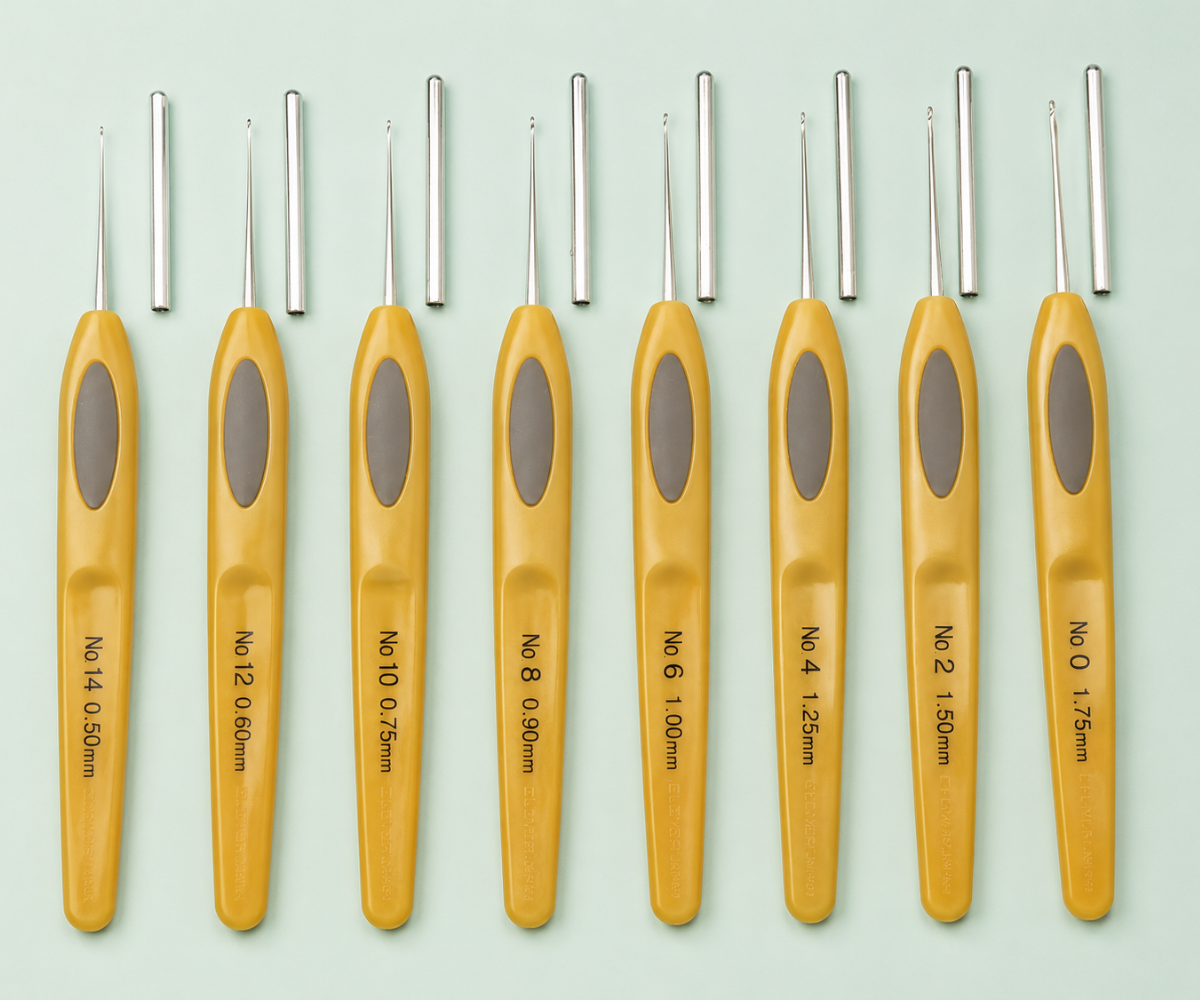
At these sizes, small differences in hook-head geometry and handle control can become especially noticeable.
Soft Touch goes down to 0,50 mm.
Amour goes down to 0,60 mm.
These sizes are especially useful for delicate work, very fine threads, details and projects where precision matters more than speed.
Some comparisons come up again and again among experienced crocheters.
This is one of them:
Clover Soft Touch or Tulip ETIMO.
Both are Japanese references in premium crochet.
Both were developed with ergonomics, precision and long sessions in mind.
But when held side by side, one thing becomes clear: they feel quite different.
For us, there is no universal winner.
Soft Touch and ETIMO represent two different ways of solving the same problem: how to relate the hand, crochet hook and yarn through thousands of repeated movements.
Clover Soft Touch uses a relatively flat, wide and compact handle.
The feel can be very direct: the fingers remain close to the shaft and hook head.
Tulip ETIMO uses a rounder, fuller cushion grip.
It has more volume and distributes contact with the hand differently.
This seemingly simple difference can completely change personal preference.
For Soft Touch, Clover specifies a rounded tip and a relatively shallow groove, designed to pick up yarn with small movements.
Tulip develops ETIMO around a carefully finished hook head designed to catch and release yarn smoothly.
We do not consider one geometry inherently superior to the other.
What matters is understanding that hook-head shape changes how the crochet hook enters the stitch, catches the yarn and releases it.
A visually tiny difference can become significant after several thousand stitches.
Soft Touch feels especially light and compact.
ETIMO has more presence in the hand because of the shape and volume of its cushion grip.
Some crocheters prefer to feel very little handle.
Others prefer a tool that occupies more surface area in the hand.
Neither preference is technically better.
The way a crochet hook is held can completely change how a tool feels.
Wrist angle, thumb position, which fingers control the handle and how far the tool extends behind the hand all change the experience.
That is why we avoid saying that one model belongs exclusively to pencil grip o knife grip.
Some crocheters use both grip styles comfortably with either family.
| Feature | Clover Soft Touch | Tulip ETIMO |
|---|---|---|
| Handle philosophy | Compact, wide and relatively flat | Rounder and more cushioned |
| Feel | Lightweight and direct | Soft and fuller in the hand |
| Finger support | Flat, defined area | Fuller cushion grip |
| Hook head | Rounded tip and shallow groove | Polished head designed for smooth movement |
| Presence in the hand | Lower | Greater |
| We would look first if... | You prefer a compact tool that stays close to the work | You prefer a more cushioned, fuller handle |
CONTACT BUDETEX ABOUT CLOVER CONTACT BUDETEX ABOUT CLOVER
We would look at it first if:
We would look at it first if:
Our recommendation: if you are deciding between Soft Touch and ETIMO, choose a size you use frequently — for example 3, 3.5 or 4 mm — and try one hook from each family before buying a complete set.
For us, the question is not: which is better?
The right question is:
which works best with your hand, your way of holding the crochet hook and the way you work with yarn?
Soft Touch and ETIMO became two references precisely because they solve the same problem very well in different ways.
We would first consider Soft Touch or Amour in the size appropriate for the yarn.
Soft Touch may be especially interesting if you prefer a compact tool and short movements.
Both Soft Touch and Amour can work very well.
The choice depends mainly on which handle type feels more comfortable over several hours.
We would look at the fine-size ranges of Soft Touch and Amour.
Soft Touch also offers sizes down to 0.50 mm.
Amour has a clear advantage in range: it goes up to 15 mm.
We would try Amour first if you want more grip volume.
We would try Soft Touch first if you want to keep the tool compact while still having a clearly defined support area.
Although our Clover selection is focused on crochet, the brand also develops knitting needles.
Its international catalog includes circular needles and bamboo lines such as Takumi.
Clover has long used bamboo as a needle material, aiming to combine a smooth surface with a small amount of natural grip on the yarn.
These lines are currently not part of our regular selection at Budetex.
We prefer to focus our Clover collection on crochet tools, where we believe Soft Touch and Amour have an especially strong identity.

Clover is a Japanese manufacturer specializing in tools for needlework, sewing, knitting, crochet, patchwork and crafts.
Its catalog is far broader than the selection we regularly carry at Budetex.
Within that universe, Soft Touch and Amour are two good examples of a recurring design philosophy:
observe a repetitive movement and redesign the tool to make it more comfortable, controllable and precise.
In crochet, that philosophy is expressed mainly in the relationship between hook head, throat, handle and hand.
Soft Touch has a flatter, lighter and more compact handle. Amour uses a three-dimensional, fuller handle completely covered in non-slip material.
Standard Soft Touch is made from 2 to 6 mm. The fine version covers sizes from 0.50 to 1.75 mm.
Standard Amour is made from 2 to 15 mm. The fine version covers sizes from 0.60 to 1.75 mm.
Yes. Clover develops it with a lightweight, wide grip and a soft support area, designed to make holding the tool easier and reduce fatigue during long sessions.
Not necessarily.
They are two different ergonomic approaches. Amour has a fuller handle, while Soft Touch is flatter and more compact. Preference depends on the hand and how the crochet hook is held.
Both are premium crochet hooks of Japanese origin with different design philosophies.
Soft Touch is more compact and flat. ETIMO has a rounder, fuller cushion grip.
We recommend trying both in a size you use regularly before deciding which family best suits your hand.
Within Clover, our first reference would be Soft Touch if you want a lightweight, compact tool.
If you prefer a fuller handle, we would look first at Amour.
Yes. Clover offers straight needles, circular needles and bamboo lines such as Takumi, although they are not currently part of our regular Budetex selection.
Yes. The Amour family goes up to 15 mm.
Yes. Soft Touch goes down to 0.50 mm and Amour to 0.60 mm.
Two families.
Two different ways of thinking about the handle.
Soft Touch: lightweight, compact and direct.
Amour: fuller in the hand, soft and available in a very wide size range.
Before choosing, consider: how you hold the crochet hook · which size you use most · how much time you spend crocheting · whether you prefer a flat or fuller handle · what kind of feel you want in the hand.
Then choose the tool.


